Understanding Ottoman Palace Cuisine
The Ottoman Empire ruled three continents for six centuries. That dominance left not only political but also gastronomic, cultural, and philosophical imprints of extraordinary depth. Ottoman palace cuisine is perhaps the most powerful root of modern Turkish gastronomy — a synthesis that brought together Central Asian nomadic meat traditions, the fertile agricultural abundance of Anatolia, the spice wisdom of the Arab world, and the robust flavors of the Balkans onto a single imperial table.
As a professional chef, I always say: you cannot design the cuisine of the future without understanding the past. Studying Ottoman palace cooking doesn't just satisfy historical curiosity — it lets you see the core logic of modern fine dining — specialization, spice balance, and the orchestration of fresh, fermented, and dried ingredients — working five hundred years earlier.
Matbah-ı Amire: The Culinary Academy of the Empire
Located north of Topkapi Palace's main courtyard, the Matbah-ı Amire (Imperial Kitchens) was one of the most organized large-scale feeding operations the world had seen. During the reign of Suleiman the Magnificent (1520–1566), historical records document between 1,000 and 1,300 kitchen staff. On ordinary days, the palace fed between 4,000 and 10,000 people, including court members, janissaries, diplomatic guests, and palace officials.
The Station System and Specialization
The most striking feature of the Matbah-ı Amire is its specialization model — which maps almost exactly onto the modern Michelin kitchen brigade:
- Pilavcılar (Rice Specialists): Masters of rice cookery who produced perfect pilaf for every service.
- Helvacılar (Dessert Makers): Craftsmen of helva varieties made with sugar, starch, sesame, and various fats.
- Kebapçılar (Grill Masters): Fire management experts who controlled the precise heat of embers and the resting times of meats.
- Börekçiler (Pastry Artisans): Masters of stretching yufka dough to near-translucent thinness.
- Hekim-Aşçı Unit: A medicinal cooking division working in coordination with the palace physicians.
This hierarchy is the five-hundred-year-old equivalent of the modern chef de partie system. Every section had a master craftsman, journeymen, and apprentices. Knowledge passed vertically — from master to student through oral transmission and direct practice.
Recipe Records and Knowledge Transfer
Ottoman palace recipes were preserved both orally and in written form. Palace accounting ledgers (mühasebe defterleri) recorded ingredient lists, quantities, and the seasonal occasions for which specific dishes were prepared. These records today give historians and chefs a remarkable window into recreating Ottoman flavors. Since the 2000s, Turkish gastronomy researchers have decoded these ledgers to develop modern recipes — forming the intellectual foundation of the Neo-Anatolian cuisine movement.
Iconic Ottoman Palace Dishes
Flawless Harmony of Sweet and Savory
What most sharply distinguishes Ottoman palace cuisine from medieval and Renaissance European cooking is the systematic use of sweet and tart fruits in meat dishes. This is a far earlier and more sophisticated version of today's fruit-acidity and meat-umami pairing that the world's best restaurants now practice.
Mutancana: One of the most prestigious meat dishes of the Ottoman court. Lamb or chicken is slow-cooked with raisins, almonds, honey, and warming spices. The resulting layers of sweet, salty, and sour complexity rival a modern chef's demi-glace with balsamic reduction. In my own menu work, I use Mutancana as a reference point when developing sweet-savory meat dishes.
Mahmudiye: Named after the reign of Mahmud II, this chicken dish is slowly cooked in a sauce of honey, cinnamon, cloves, and vinegar. Texture comes from soaked almonds and golden sultanas. The flavor profile aligns with the French Poulet à la normande or Moroccan Chicken Tagine with Preserved Lemon — demonstrating how Ottoman flavor logic translates across culinary traditions.
Hünkar Beğendi: Meaning "the sultan enjoyed it," this dish is Ottoman palace cuisine's most enduring legacy. Roasted eggplant is transformed into a silky purée using butter and flour in a technique resembling béchamel; slow-braised lamb ragout is spooned on top. The combination exemplifies the Ottoman synthesis of Eastern and Western technique centuries before "fusion" became a culinary movement.
Ceremonial Tables: Zerde and Baklava
Two desserts were indispensable at Ottoman ceremonial occasions — Zerde and Baklava.
Zerde is a saffron-dyed rice pudding seasoned with rosewater, honey, cloves, and cinnamon, topped with pomegranate seeds and pistachios. Saffron performs dual duty here — providing color and functioning as an antioxidant healing agent. This dessert is a concentrated summary of Ottoman culinary philosophy.
Baklava — layered yufka filled with walnuts or pistachios and soaked in syrup — was not invented by the Ottomans, but it was systematized in the imperial palace kitchens and exported throughout the Balkans. Today, Gaziantep baklava holds UNESCO Intangible Cultural Heritage status.
Spice Philosophy and the Science of Health
The Collaboration of Physician and Chef
Ottoman palace cuisine is one of history's rare examples of a systematic integration between the kitchen and medicine. The palace's head physician (hekimbaşı) and head chef (aşçıbaşı) worked together, evaluating dishes for both flavor and healing potential.
This collaboration rested on "humoral theory" (hılt) — the four bodily fluids: blood, phlegm, yellow bile, and black bile. Summer called for "cold and moist" foods; winter emphasized "warm and dry" spicing and cooking methods. Special soups and medicinal pastes prepared for hospital patients (bimarhaneler) represent practical applications of this knowledge.
Today we call this approach "functional nutrition" or "culinary wellness." The Ottoman palace institutionalized it centuries before modern nutritional science.
Silk Road Access and Spice Supremacy
After the conquest of Constantinople in 1453, the Ottoman Empire gained full control of the Silk Road's western terminus. This gave the imperial kitchen privileged access to the world's most expensive and rare spices:
- Saffron: The world's costliest spice by weight, arriving from Iran and Central Asia; deployed for color and healing.
- Black Pepper: Imported from India, priced in gold by weight across medieval Europe.
- Cloves and Nutmeg: Tropical spices from the Maluku Islands, used primarily in meat dishes and desserts.
- Cinnamon: The trade route from Sri Lanka to Ottoman Istanbul was as much a power corridor as a flavor highway.
This monopoly over spice access gave Ottoman cuisine a flavor atlas far broader than any European counterpart of the same era.
Transmitting Ottoman Culinary Heritage to Modern Gastronomy
Techniques That Traveled from Palace to Plate
Today's Neo-Anatolian chefs apply Ottoman palace techniques consciously or intuitively:
- Güveç and slow cooking: Long-hour clay-pot braising in the imperial kitchen prefigures today's sous-vide and low-temperature cooking philosophy.
- Pomegranate molasses and vinegar: The acid-meat balance was central to Ottoman culinary canon; it remains central in modern Turkish fine dining.
- Dried fruit with meat: Using prunes, dried apricots, and raisins in savory contexts has migrated from Turkish menus into contemporary Scandinavian, Nordic, and Middle Eastern fine dining.
- Thin dough presentations: Yufka techniques are being reinterpreted in modern plating as textural elements — crisp sheets, tuiles, and layered constructions.
A Chef's Perspective
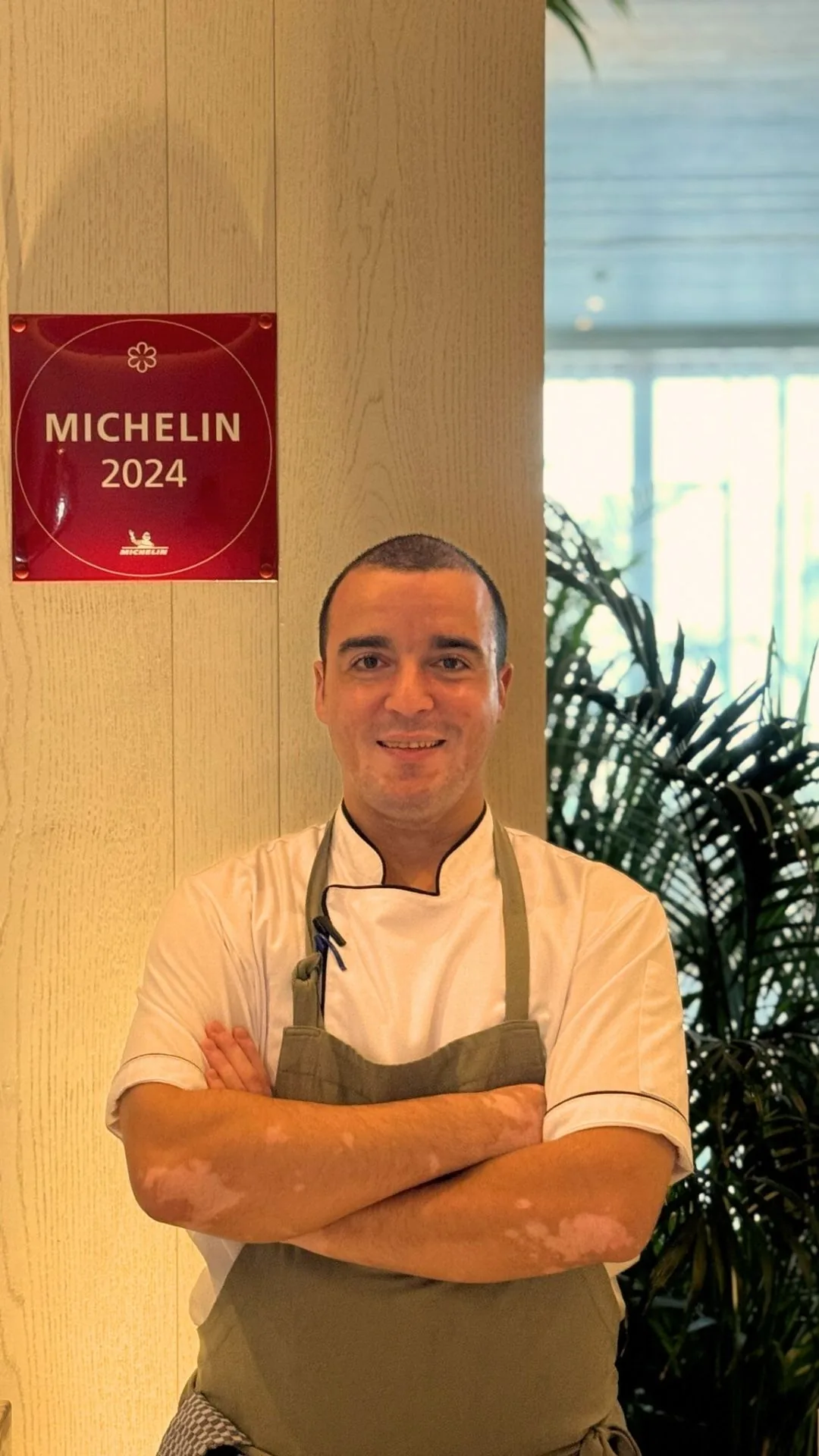
In my years working in Michelin-starred restaurants, I learned an enormous amount about technique. But when I discovered Ottoman palace cuisine, I felt something different — this wasn't a technique, it was a mindset. Reverence for every ingredient. Gravity attached to every service moment. The expectation that a chef must also be a thinker, a healer, a connector of past and present.
When I adapt Hünkar Beğendi for a modern plate, I find myself wrestling with the same question a palace chef faced five hundred years ago: "How do I make this dish simultaneously delicious, nourishing, and visually impactful?" The answer has not changed. Only the tools have evolved.
Ottoman palace cuisine has not yet received the academic and cultural recognition it deserves on the global gastronomy stage. As Turkey's Michelin presence grows — as of 2025, Turkey holds 0 three-star, 2 two-star, and 15 one-star restaurants, with 4 Bib Gourmand selections across 171 total listed establishments — the international visibility of this heritage will only deepen.
For regions, core traits and how a Turkish table is laid, see our guide to Turkish cuisine.