Why Mediterranean yacht menus have to be planned differently
A yacht menu cannot be structured like a land-based restaurant menu. Changing routes, varying port supply windows, weather variables, and the rhythm of guests at sea all require the menu to stay responsive. The most valuable skill for chefs working Mediterranean and Aegean charter routes is reading what the market offers each day and keeping the menu strong with what is actually available.
Sourcing opportunities by port and region
Different ports along the Mediterranean and Aegean offer distinct provisioning advantages:
| Port / Region | Standout products | Best season |
|---|---|---|
| Bodrum / Muğla | Dentex, grouper, octopus, local cheeses | April–October |
| Gulf of Göcek | Blue crab, sea bream, white mussels | May–September |
| Çeşme / İzmir | Sea purslane, mastic, sea bass | July–September |
| Greek islands (Rhodes, Kos) | Wild local herbs, goat cheese, calamari | June–October |
| Antalya / Kemer | Red mullet, sea cucumber, carob | April–November |
Knowing this map in advance means that when the route is confirmed, the menu framework can be built more accurately. For some ports, early contact with local suppliers is essential — especially for market-day schedules and opening hours.
Galley constraints shape the menu directly
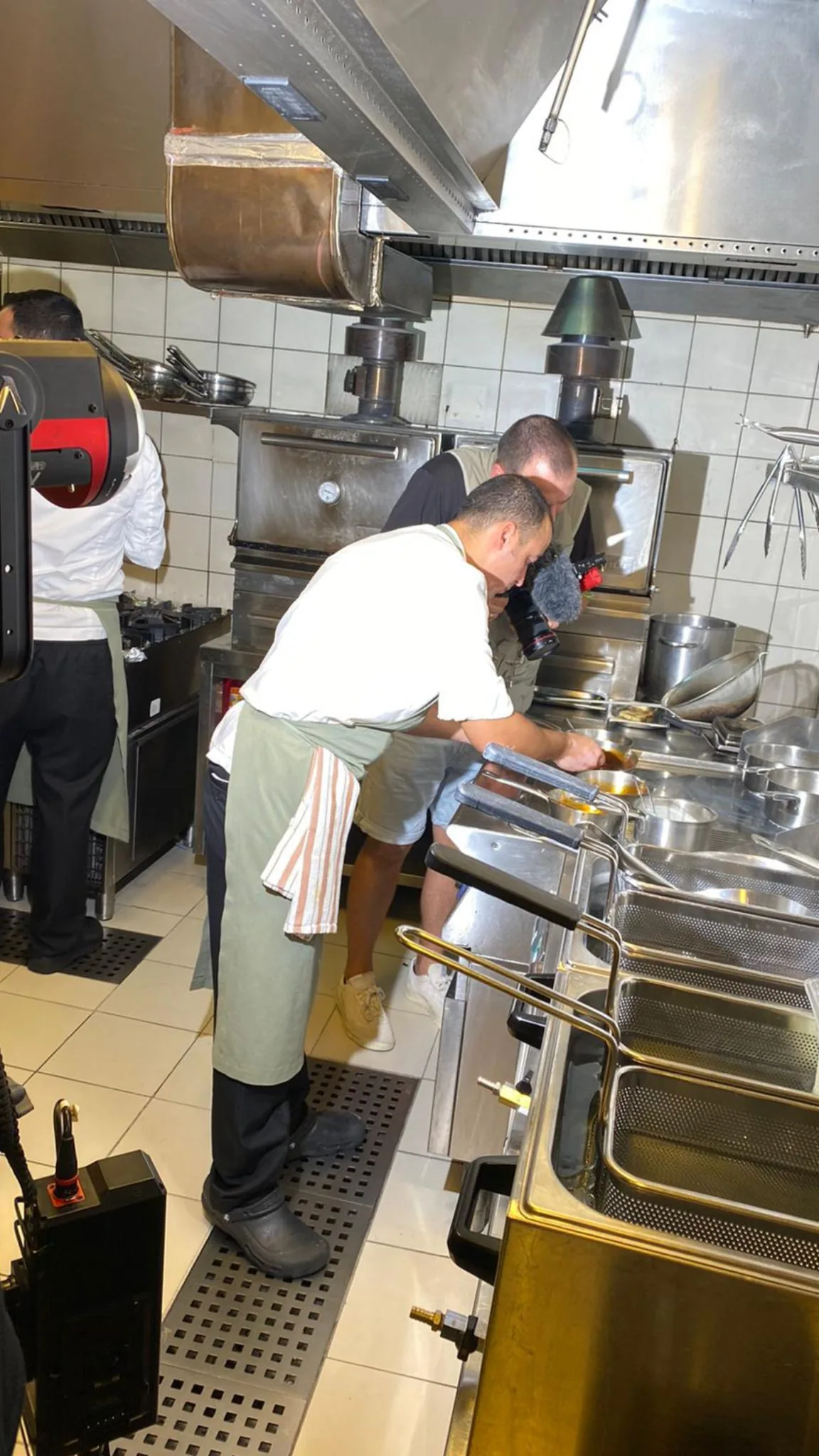
Standard galley dimensions, cold-storage capacity, and power management determine how complex the menu can be. That is why the following principles apply when designing a yacht menu:
- Prep-forward design: Minimizing a la minute production means components prepared in port or at anchor can flow directly into service.
- Cold-storage planning: Fresh product should be restocked daily or every two days on a scheduled route. Over-relying on frozen protein will always show in quality.
- Simple but refined ingredient focus: In a constrained galley, fewer components at higher quality almost always outperform complex dishes that cannot be executed cleanly.
Building guest rhythm into the menu
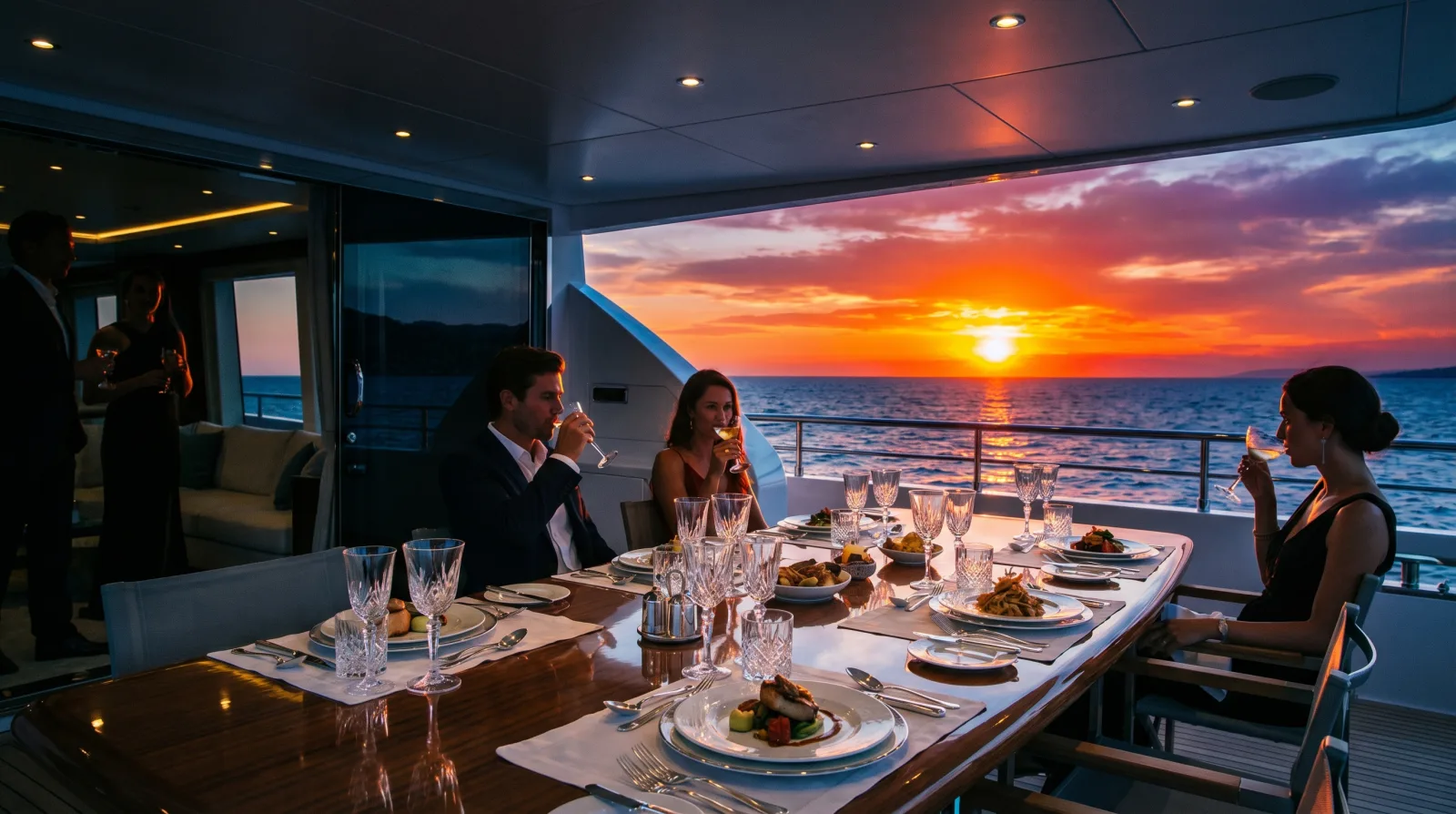
Morning flow (light breakfast, fruit, and a strong coffee service), lunch (active but simple, sharing-friendly), sunset snack bridge, and dinner (ceremonial but not endlessly prolonged) each answer a different guest signal. Anticipating those signals and designing around them — rather than serving the same structured meal three times a day — is what separates good yacht cooking from great yacht hospitality.
For a route-matched yacht menu, the fine dining on yachts guide and service scope details at luxury yacht private chef should be read together.
Conclusion
Success on a Mediterranean yacht route requires reading port opportunities, honestly managing galley capacity, and understanding guest rhythm before the boat leaves the marina. When those three elements align, a dish served on the water can genuinely compete with the best shore-side restaurants.