A yacht chef program in Turkey is not just a menu plan
A yacht chef program in Turkey is not simply about producing strong food. It is the operating structure that aligns route, guest profile, service window, galley capacity, and provisioning rhythm inside one workable brief. This article is for owner representatives, captains, charter brokers, and teams planning a premium onboard hospitality program where failure is usually expensive and highly visible.
The costliest mistake is copying land-based private dining logic directly onto the sea. Once route changes, storage limits, guest proximity, and crew rhythm are ignored, even a beautiful menu starts to feel unstable.
Why owner and charter programs have to be built differently
| Dimension | Owner yacht | Charter yacht | Why it matters |
|---|---|---|---|
| Guest behavior | Habits and repetition are visible | A new profile arrives each week | Menu language and service style cannot stay static |
| Service rhythm | Breakfast through dinner may run for days | Shorter but more impact-heavy windows matter more | Prep and shift structure change significantly |
| Approval process | Family or owner rep usually leads | Broker, captain, and preference sheet shape the program | The decision chain is different |
| Provisioning rhythm | More stable stocking can be built | Faster route-based sourcing flexibility is required | Supply mistakes show up faster |
| Diplomacy | Personal continuity matters more | Fast adaptation matters more | Communication quality becomes part of the service |
Programs that ignore this distinction usually become either too heavy or too loose. That is why the yacht galley guide and luxury yacht fine dining service belong in the same planning conversation.
Route guest profile and service window have to be read together
A healthy yacht program studies the day before it studies the plate. Departure port, crossing days, anchoring windows, beach-club plans, children onboard, athlete preferences, alcohol expectations, and late-night service all belong in the same brief. Looking only at dinner is a weak way to plan a full hospitality program.
For example, a four-day owner program leaving Bodrum is not built the same way as a charter moving between Gocek and the Greek islands. One may need consistency and deeper personalization across repeated meals. The other may need a powerful first dinner and then a more flexible structure as weather, anchoring, and guest behavior evolve. That is why the Mediterranean yacht routes guide and the Mediterranean yacht provisioning checklist are natural companion reads.
The practical heuristic is simple: every unanswered question in the brief returns later as service stress. Guest count, allergies, child menus, crew-meal needs, service hour, favorite products, and sourcing stops should be locked during proposal stage, not after boarding.
Which details should be fixed in the first briefing
Strong yacht chef programs usually lock four areas early:
- 1Route and schedule: which ports matter, which crossings exist, and where fresh purchasing can realistically happen.
- 2Guest profile: headcount, age mix, dietary needs, allergies, and experience expectations.
- 3Service window: dinner only, full-day flow, late snacks, crew meal, or event-led timing.
- 4Galley reality: equipment capacity, refrigeration, serviceware, and support labor.
Pricing or menu sign-off given before those points are clear is usually optimistic. Every late change weakens the provisioning and prep balance. That is also why the definitive yacht and jet dining guide and private jet fine dining matter here: they represent adjacent operating layers, not just adjacent venues.
The earliest red flags in a weak yacht program
Three early signals usually expose a fragile program. First, the menu is written as if route and weather do not matter. Second, critical decisions are postponed because the preference sheet is late. Third, support labor, serviceware, or provision flow are treated as details to solve onboard. Improvisation may look romantic in yacht hospitality, but in premium execution it usually becomes expensive.
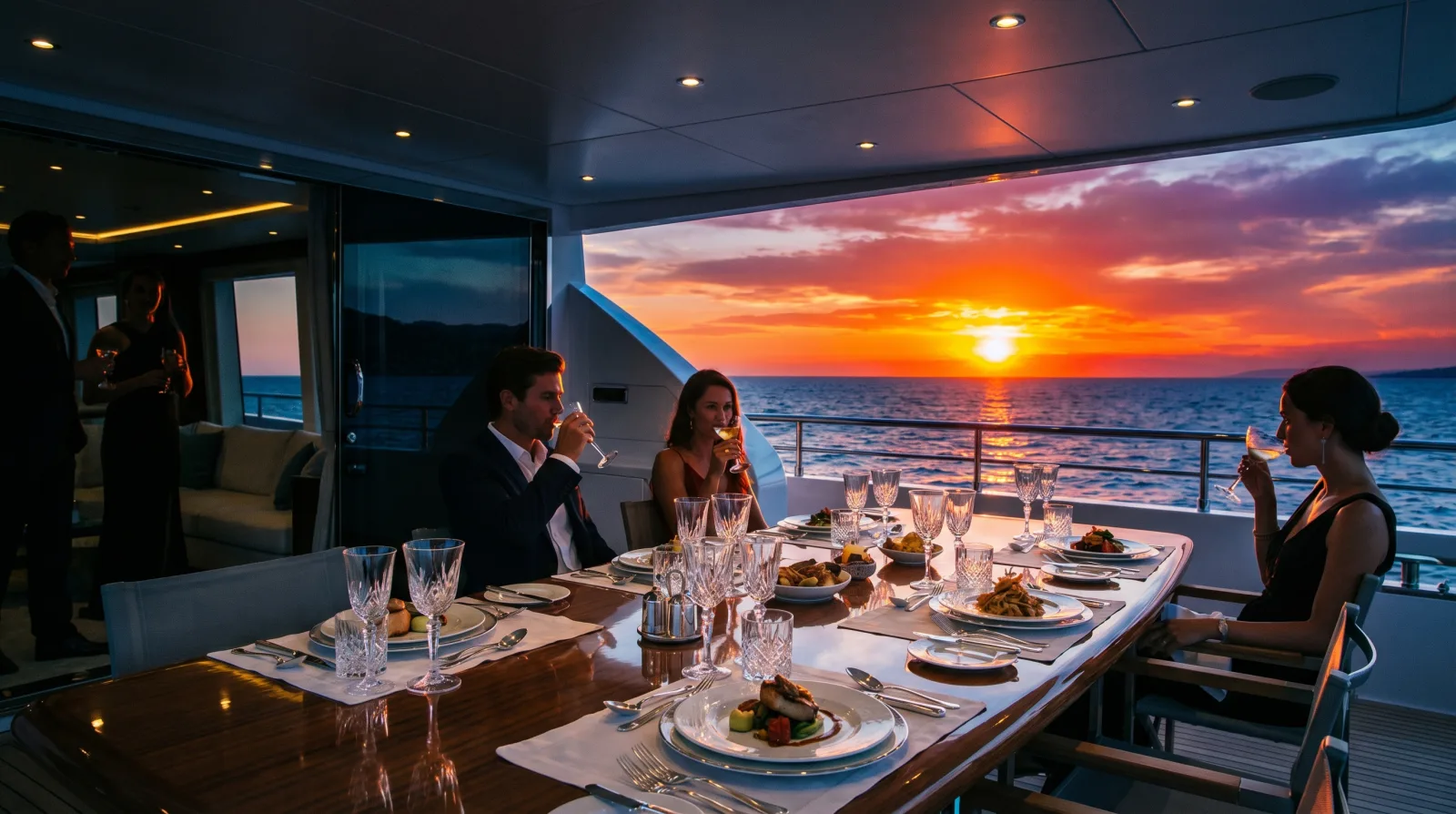
A well-built program feels calm to the guest. If the onboard experience feels continuous and effortless, the hidden work was done correctly. That is exactly where luxury yacht fine dining creates value: by making the operating program as defensible as the menu.