Mise en Place Philosophy and Michelin Standard
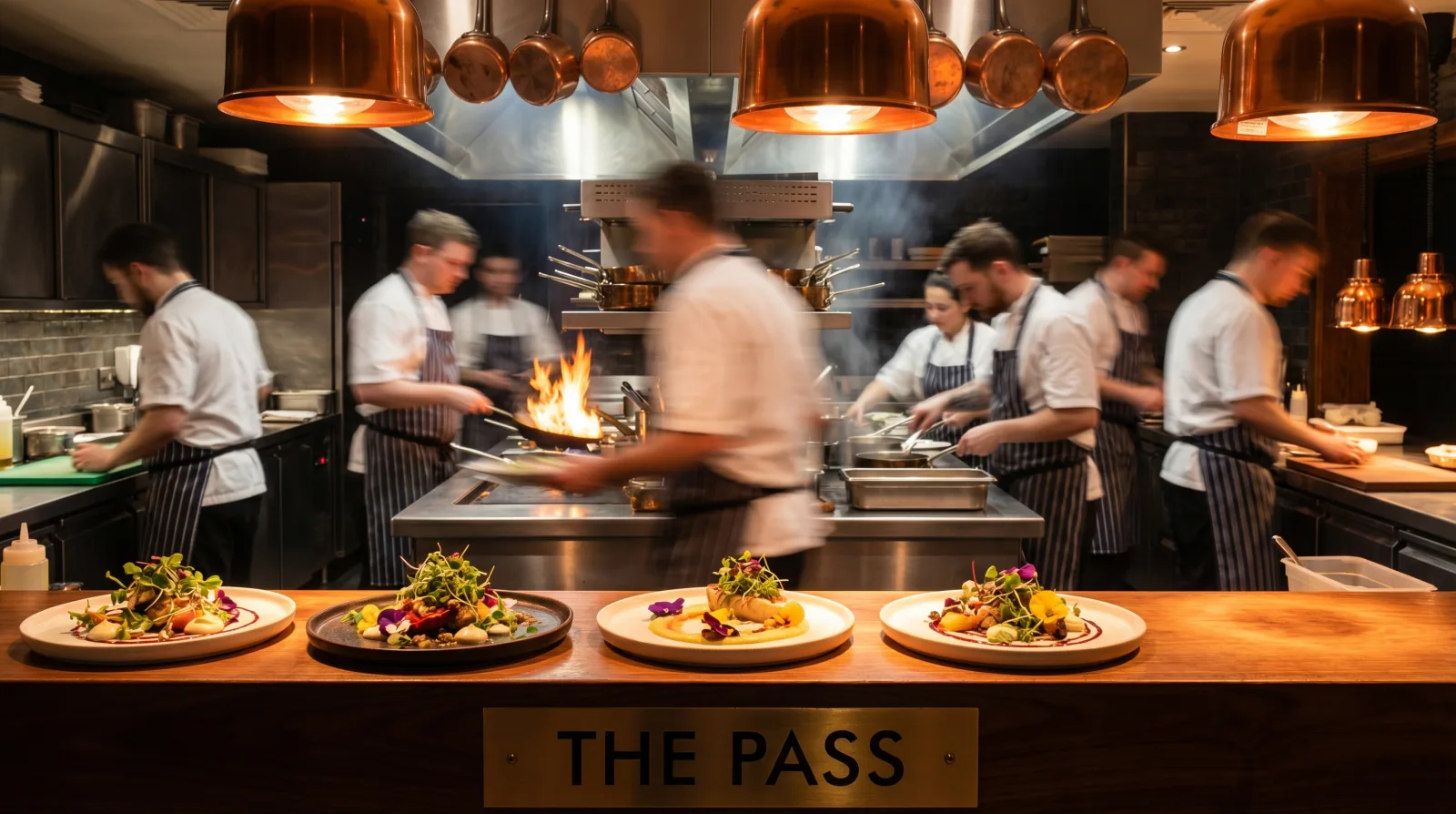
"Mise en place" — everything in its place — is the foundational belief of Michelin kitchens. The phrase describes not merely a kitchen technique but a state of mind: all decisions made, all components ready before service begins.
Michelin-level consistency does not emerge by accident. Not the chef's genius or inspired moments, but systematic preparation that begins days earlier creates decisive room to manoeuvre during service. A kitchen that enters a crisis unprepared produces errors at precisely the most critical moments.
This philosophy has practical consequences: the prep schedule is the most important document of the day. Incomplete prep is not negotiated — it is solved.
Daily Preparation Protocol
The daily operations cycle in a Michelin kitchen has five layers:
Opening check: refrigerator and freezer temperatures, order completeness, cleanliness and organisation audit. This check is documented in writing.
Delivery acceptance: every product is evaluated against specification for weight, colour, smell, and appearance. Sub-standard products are returned; they are never sorted through.
Prep task allocation: every station's morning list is completed in full. Critical preparations must be finished 4 hours before service; fine preparations 2 hours before.
Pre-service briefing: 15-20 minutes covering menu changes, reservation special notes, allergen alerts, and the day's priorities.
Post-service close: every station is closed according to the hygiene protocol. Notes for the following day are recorded.
Quality Control Systems and Checkpoints
Three-layer quality control is the standard in Michelin kitchens:
Delivery acceptance layer: not only exterior appearance but internal quality is checked. Organoleptic evaluation — smell, texture, colour — is mandatory for meat, fish, and delicate vegetables.
Prep completion layer: prepared components are compared against the standard recipe reference photograph. Grammature measurements are verified at defined intervals.
Pre-service layer: every plate is physically inspected by the chef. Visual and taste control happens at this stage. This control protocol is written and signed.
A named responsible person is assigned to each layer. Ambiguity of responsibility is the most common cause of quality decline.
Team Behavior and Standard Compliance
Writing protocols on paper is not enough; they must be embedded in team behaviour. A structured training process for new staff and periodic refresher briefings for existing staff are non-negotiable.
When standard deviations are framed as learning opportunities rather than punishable offences, the team applies protocols rather than conceals them.
When employees understand the "why", compliance with the "how" increases. A cook who understands why a mise preparation must meet a certain quality will not lower the standard even under pressure.
Measurement, Feedback, and Continuous Improvement
Michelin kitchens are kitchens that measure. Food waste rate, errors per service, preparation times, and guest complaints are recorded and periodically reviewed.
A weekly operations review creates shared reality at both management and team level. The team sees together what is working and what needs correction.
The best Michelin kitchens are not static. Their protocols are reviewed at least once a year and updated in light of new data and observations.