What is the kitchen hierarchy?
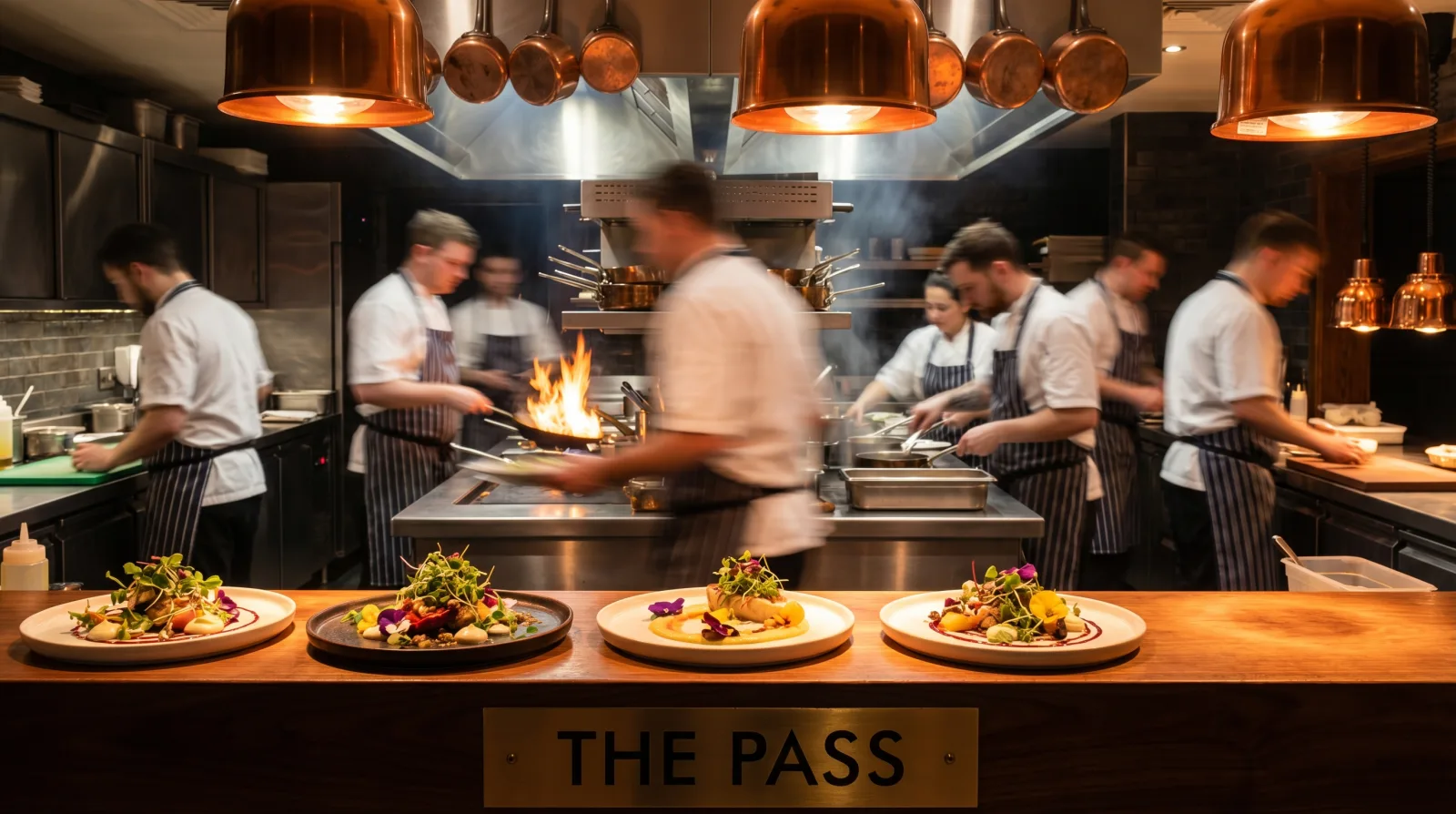
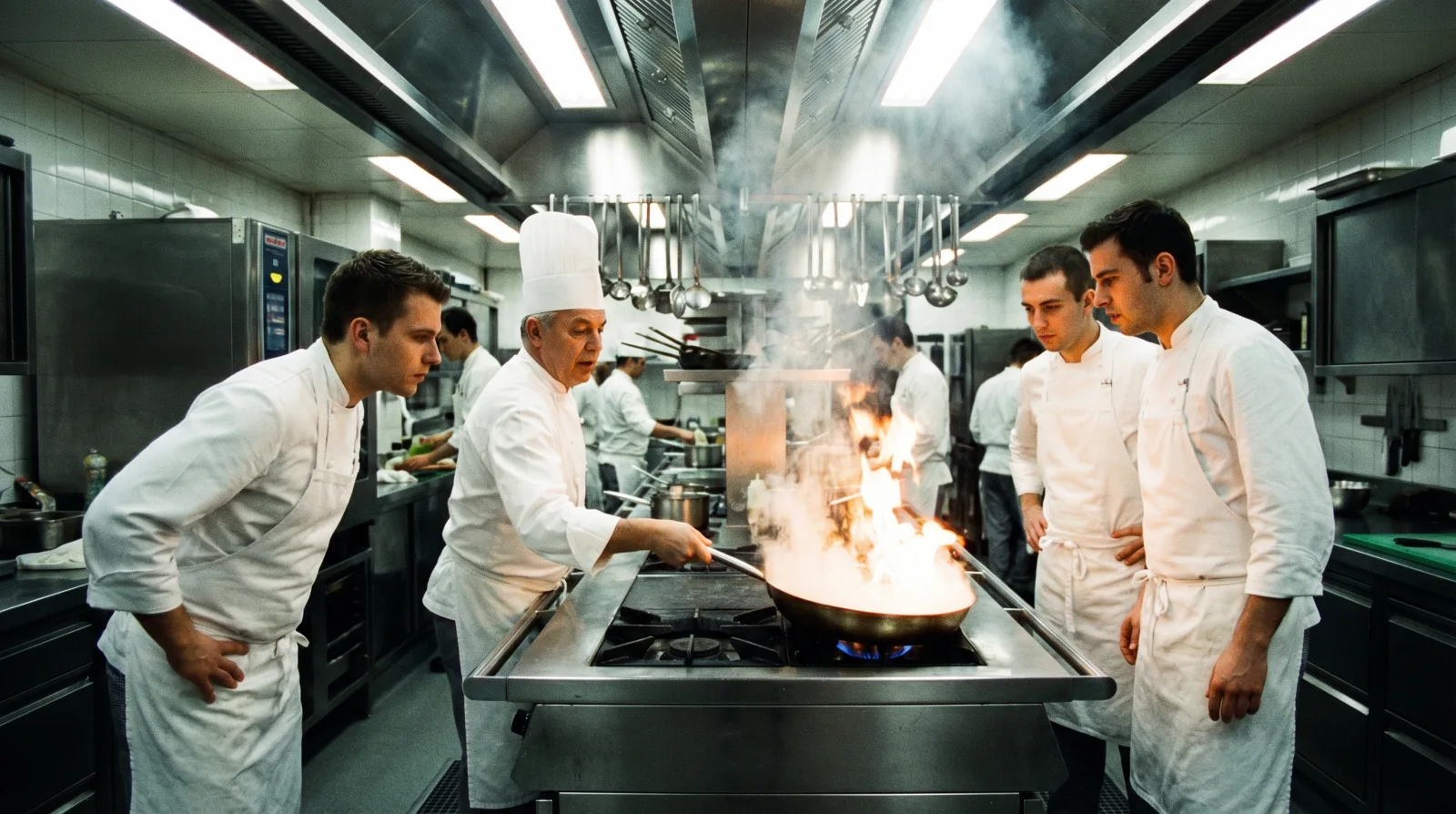
The kitchen hierarchy is the structure that divides duties and responsibility in a professional kitchen. During a busy service it makes clear who gives instructions and who owns each plate. Its classic form is the brigade system (*brigade de cuisine*).
Where does the brigade system come from?
The French chef Auguste Escoffier (1846–1935) is credited as its architect. He brought the chain of command he knew from military service into the kitchen: every station has an owner, and every owner has a superior. The word "chef" itself is a title, from the French for "chief" or "head".
Kitchen hierarchy chart
| Level | Title | Also called | Main duty |
|---|---|---|---|
| 1 | Executive chef | Head chef in larger groups | Final responsibility for menu, cost, purchasing and team; may run several kitchens |
| 2 | Chef de cuisine | Head chef | Daily management of one kitchen |
| 3 | Sous chef | Deputy chef | Runs service and takes over when the chef is absent |
| 4 | Chef de partie | Station chef, line cook lead | Runs one station and its dishes |
| 5 | Demi chef de partie | Assistant station chef | Assists the station chef and can hold the station on a shift |
| 6 | Commis | Junior cook | Prep and station support; the entry level of the trade |
| 7 | Apprenti / stagiaire | Apprentice, intern | Someone in training |
| Support | Plongeur | Dishwasher | Pots, equipment and hygiene support |
Kitchen stations
In large kitchens each chef de partie owns a station:
| Station | English | What it prepares |
|---|---|---|
| Saucier | Sauce | Sauces and sautéed meats |
| Poissonnier | Fish | Fish and seafood |
| Rôtisseur | Roast | Oven-roasted meats |
| Grillardin | Grill | Grilled items |
| Friturier | Fry | Fried items |
| Entremetier | Vegetables | Vegetables, soups, eggs and starches |
| Garde manger | Pantry | Salads, cold starters, charcuterie |
| Pâtissier | Pastry | Desserts and baked goods |
| Tournant | Relief | Covers whichever station needs help |
Each station's pre-service work relies on mise en place. In the dining room the equivalent structure is the maître d', the sommelier and the service commis.
How does the hierarchy work in small kitchens?
A ten-person brigade is not realistic for every restaurant. In smaller businesses there are fewer titles, but the logic of responsibility stays the same:
| Kitchen size | Typical structure |
|---|---|
| 2–3 people | Head chef, cook, commis |
| 4–8 people | Head chef, sous chef, 2–3 station cooks, commis |
| 9 or more | Executive chef or head chef, sous chef, a chef de partie per station, commis, dishwasher |
What matters is not the title but that every plate and every hour has a clear owner. Modern kitchens can run flatter teams, but service still needs one person making the call.
How do you fit your team into this structure?
Split the menu into stations first, then work out each station's load at peak. Put job descriptions, shifts and authority limits in writing. For more, read how to build a professional kitchen team and the Michelin-level brigade. For businesses that want this installed on site, we offer kitchen team training.
For the training routes into these roles, see how to become a chef. For what each level earns, see our chef salary data.