What separates one type of restaurant from another?
Restaurant types are defined less by décor than by three decisions: how guests are served (at the table or at a counter), how the menu is built (short and fixed, broad, or a tasting menu) and the average spend. Those three decisions set the size of the kitchen, the shape of the team and what profit depends on.
| Type | Service | Menu | Average spend |
|---|---|---|---|
| Fine dining | Table service with protocol | Tasting menu or a short à la carte | High |
| Fine casual | Mostly counter ordering | Short, quality-led | Upper-middle |
| Casual dining | Table service, relaxed | Broad, crowd-pleasing | Middle |
| Fast casual | Counter ordering, made to order | Short, customisable | Lower-middle |
| Fast food (QSR) | Counter, takeaway, drive-thru | Standardised, fast | Low |
| Bistro | Table service, intimate | Short, changing, dish of the day | Middle |
| Brasserie | Table service, large room | Classic and fixed, long hours | Middle |
| Meyhane | Table service, long shared table | Meze, hot starters, fish | Middle |
| Esnaf lokantası | Choose at the counter | Daily home-style stews | Low |
Fine dining
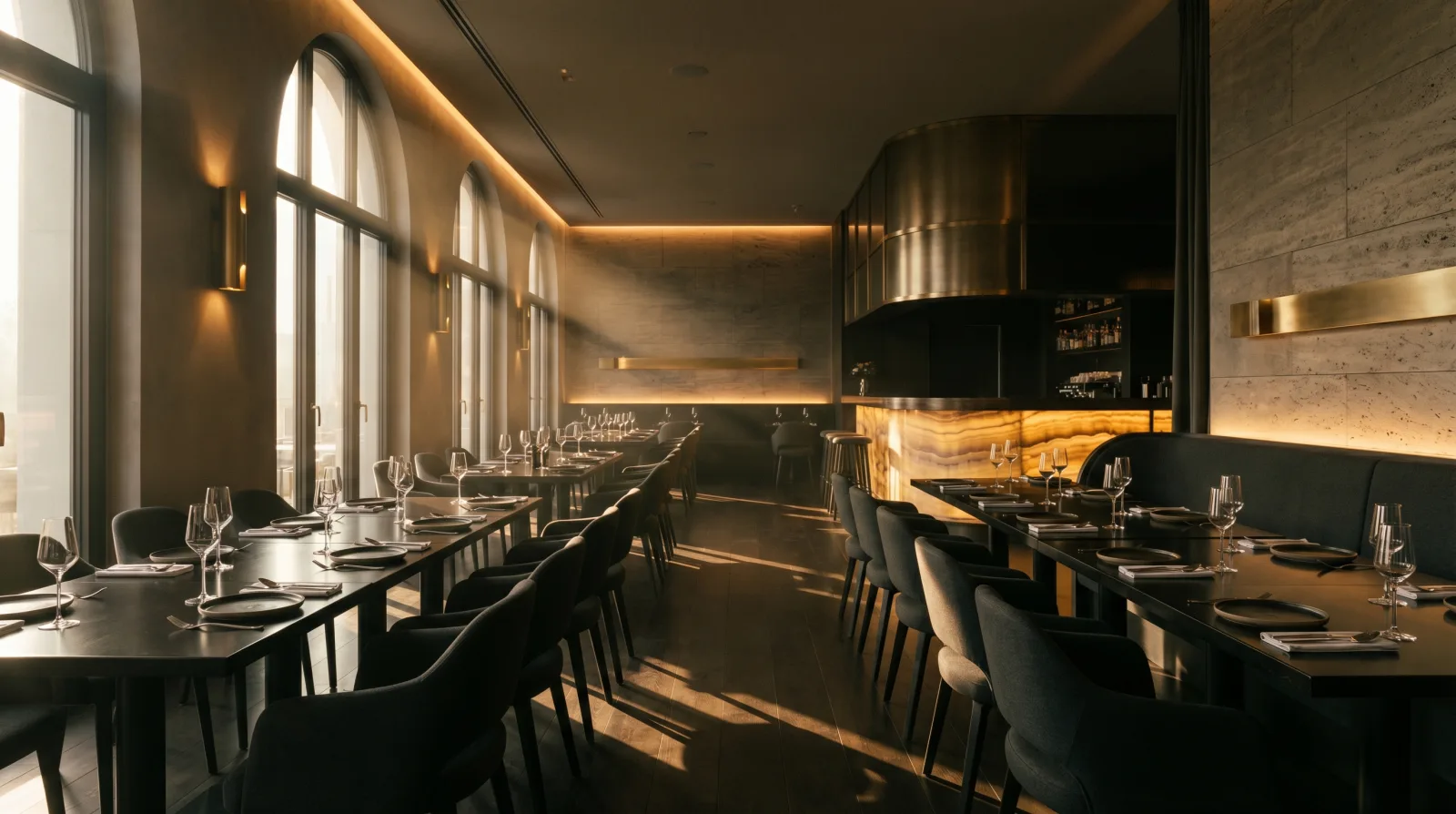
Fine dining is the type where service protocol, menu composition and kitchen discipline are held to the highest standard. The menu is usually a tasting menu or a short [à la carte](/en/blog/alakart-ne-demek) (each dish listed and priced separately). We cover it in detail in what fine dining means.
Fine casual
What is fine casual? Fine casual combines fine-dining-quality ingredients and cooking with counter ordering and a relaxed room, without table service. The term spread in the US during the 2010s. Guests pay more than for fast food for a better product, without the time or price of fine dining.
Casual dining
What is casual dining? Casual dining is a table-service restaurant with a relaxed atmosphere and moderate prices. The menu is broad, built for families, groups of friends and business lunches, and most restaurant chains sit in this category. Profit depends on consistent quality across a wide menu and on table turns, which is why menu engineering matters so much here.
Fast casual and fast food (QSR)
What is fast food? Fast food is a standardised menu prepared quickly and served from a counter, as takeaway or at a drive-thru. The industry also calls it QSR (quick service restaurant). Fast casual keeps the speed but cooks to order with fresher ingredients, one price step higher.
Bistro and brasserie
A bistro is a small, informal restaurant of French origin: a short, changing menu, home-style dishes and fair prices. A brasserie is a larger room, open long hours, with a classic fixed menu. We explain the difference in what is a bistro.
Meyhane
What is a meyhane? A meyhane is the traditional Turkish tavern where meze, hot starters and fish are shared at a long table over rakı. A slow evening and meze arriving in waves define it. See our meze guide for the dishes.
Esnaf lokantası
What is an esnaf lokantası? It is the Turkish tradesmen's restaurant: home-style stews cooked daily and displayed at a counter, where guests choose their plate. It is lunch-focused, fast and affordable, and its profit depends on balancing what sells out against what is wasted.
Which type of restaurant fits your plan?
Choosing a type is a business-model decision, not a matter of taste. Start with three questions:
- 1When does your location get its traffic? A lunch crowd suits an esnaf lokantası or fast casual; evening traffic suits a bistro, meyhane or casual dining.
- 2What is your target average spend? It decides how large the kitchen and service team can be.
- 3How big are your kitchen and team? A broad menu needs a large kitchen and team; a short menu works better in a small space.
For café and delivery-led models see opening a café and what is a ghost kitchen. To set the concept up properly from the start, read restaurant concept design or see our restaurant launch consulting.